Geekdom Doesn’t Have a Programming Problem. It Has a Valley of Death Problem.
I wrote a few days ago that San Antonio doesn’t have a startup problem, it has an identity problem. That post was about the city. This one is about the building that startups here go to in order to start and grow.
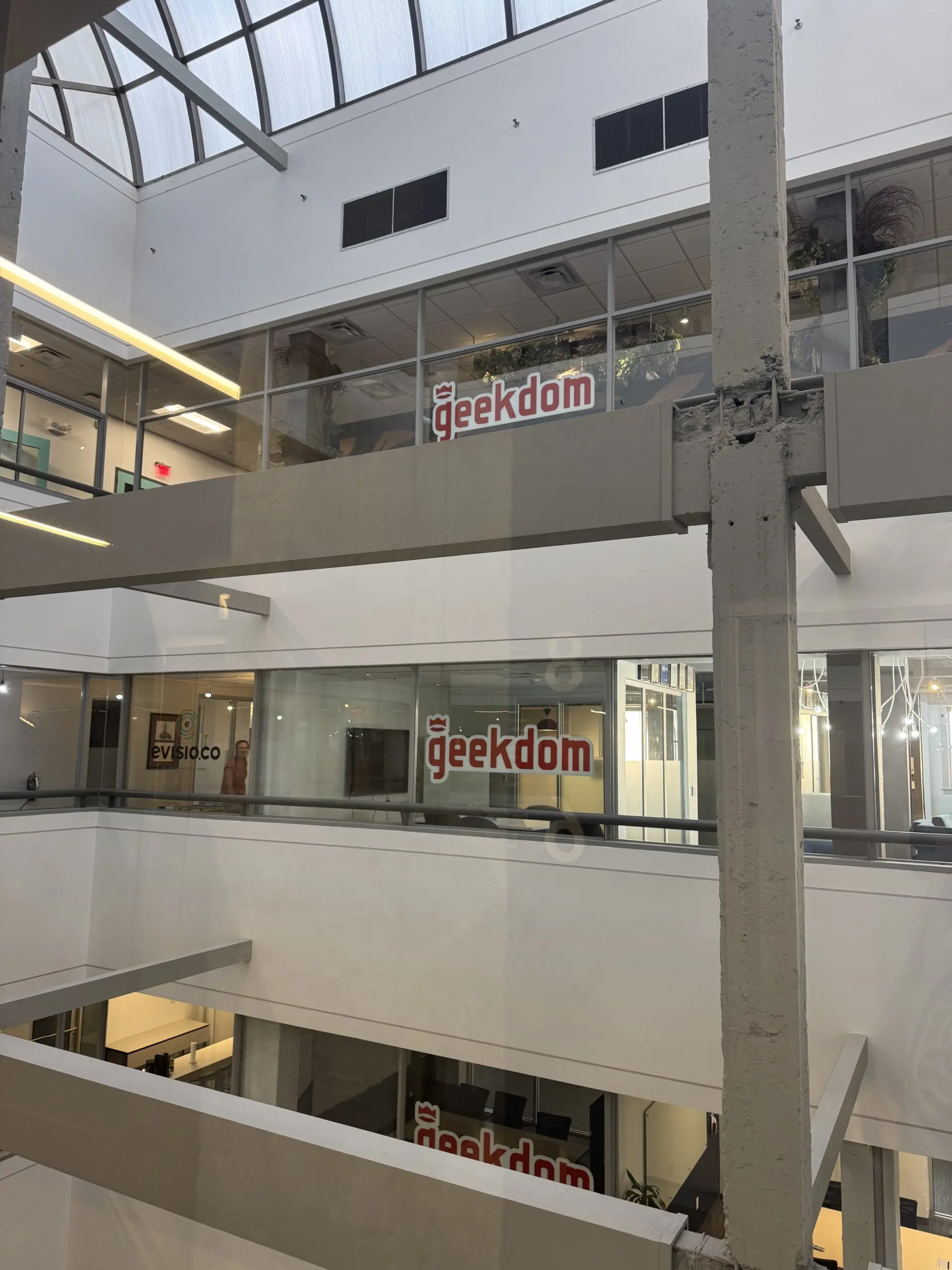
Geekdom has been the brightest light in San Antonio tech for 15 years, and I mean that without any hedging. Graham Weston and Nick Longo put it downtown in 2011, back when the honest answer to “where do I go to build something in this city” was nowhere, and within a couple of years it had become the default answer. That’s not a small thing to have built. A lot of people, including me, got their whole sense of what was possible here from walking into that building.

Fifteen years later it’s still the answer to that question, which is exactly what I want to talk about. Not because the answer is wrong, but because it’s the only one we ever built.
Everything Geekdom does well happens in the first year of a company’s life. The bootcamps, the incubator, the pitch practice, the first small check, the introductions to other people who are also just starting. All of it is aimed at the stretch when a person has an idea, or the rough beginnings of a product, and no clear idea what to do next. That’s a real need, and Geekdom serves it better than anyone in South Texas.
But almost nothing in that building helps you at month 18. Month 18 is when you have a working product, a dozen customers who like it, no salary, a growing sense that you are burning through the runway your family gave you, and a genuinely open question about whether to keep going or go get a job. That’s the valley of death. It’s where San Antonio companies actually die, and I mean that literally rather than as a figure of speech, because I have watched it happen to people I know. We have spent 15 years and a lot of philanthropic money building an ecosystem that stops at the trailhead and then wonders why nobody reaches the summit.
I paid for this. Quietly.
Before I go further, I want to be clear about where I’m standing, because there’s a version of this post that reads like somebody complaining from the cheap seats and I don’t want to write that one.
I sponsored the Growth Academy. I did it with almost no fanfare because I didn’t want it to be a pure marketing play; I wanted founders to get help (though there was supposed to be more press than there was, here nor there). I also sponsored Pitch It To Win It during Startup Week. I gave founders a platform on The Marketing Boost, because most of them had a genuinely interesting story and no way to get anyone to hear it, and a podcast episode was something I could actually give away. I mentored at the bootcamps, and I made them every month I could, sitting with people who had an idea and no vocabulary for it yet, helping them build a pitch that made sense to somebody other than themselves.
The founders in the Growth Academy include Maria at Hess Street Foods, Laura at Code Flight, Llyas at GrantAppli, and John at PacAPit. Good people building real things, and I’d do it again for any of them.
I’ve also written checks into startups that came out of these programs. Here’s the part that took me a while to notice: not one of them ever sent me a referral, an intro, or a client. I want to be careful with that, because it isn’t a grievance about those founders, who were heads-down trying to survive and had no obligation to feed my business. It’s information about what the system trains people to do. You go through the program, you get your certificate and your demo day, and then you go quiet and disappear into your own problem. Nobody ever taught anyone in that building that the ecosystem is supposed to be a thing you feed back into. So it isn’t one.
I’m not writing this from the outside. I’m writing it from the inside.
The programming is all top of funnel
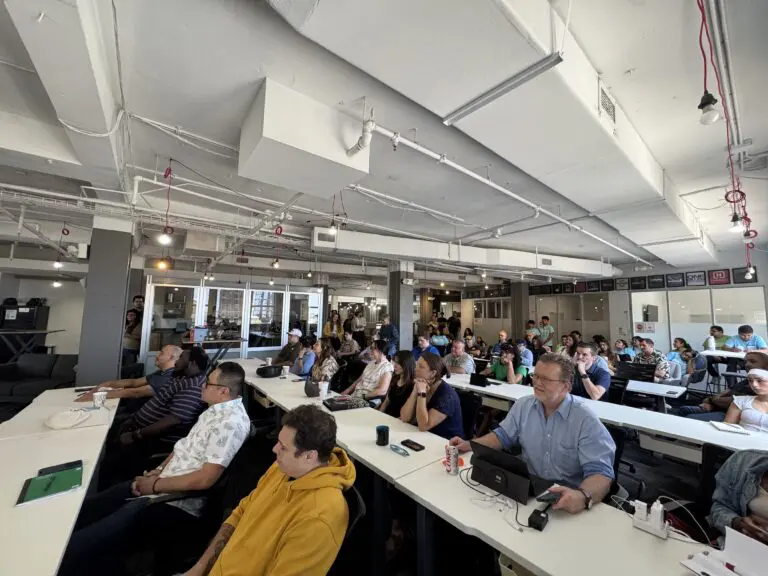
Look at what Geekdom actually runs right now: Startup Bootcamp, the Incubator, the Pre-Accelerator, the Community Fund, mentorship.
Read that list in order, and you can see the whole theory of change.
- Get the idea out of someone’s head.
- Turn the idea into a company.
- Turn the company into something an investor might glance at.
- Write a small check.
- Give them somebody to talk to.
It is a well-designed sequence, and it does what it was built to do: take a person from zero to one.
Cristy Lime ran the bootcamps when I was mentoring in them, and she was excellent at it, which is why I kept showing up. She was organized, direct, and drove the room instead of letting it turn into 45 minutes of networking with a slide deck attached. She made those sessions worth a founder’s Saturday. She’s since left and started The Optimization Specialists, and the bootcamps have not been the same since. Less structure, less follow-through, less useful. That’s a real loss, and I don’t think the organization ever fully registered that it happened.

But here’s the harder thing I’ve come around to, and it isn’t about Cristy or anyone who ran those rooms. Even at their absolute best, the bootcamps were the wrong thing to be best at.
Nobody in San Antonio is failing because they couldn’t fill out a Lean Canvas. They’re failing at month 14 with 11 customers, $2,000 in monthly revenue, a spouse asking an entirely reasonable question about health insurance, and nobody in the city who has been through that specific stretch and can tell them what happens on the other side of it. That founder doesn’t need a workshop. They need somebody who has done it, on the phone, willing to be honest, plus about six months of money. There is no program in San Antonio that provides either one.
Geekdom’s own 2024 numbers make the case better than any argument I could construct: 164 startups launched, $30 million raised, 109 jobs created, $155,000 invested through its programs.
Sit with that for a second. A cohort of 164 companies produced 109 jobs, which means the median company in that group hired nobody at all.
And the jobs number raises a set of questions that nobody publishes answers to:
- What did those 109 jobs pay?
- Were they full-time, part-time, or contract?
- How many of them still existed 12 months later?
- How many were the founder paying themselves for the first time?
- How many were in San Antonio, and how many were remote hires somewhere else?
A $95,000 engineering role that’s still on the books in 2026 and a part-time gig that ended the week the pitch prize money ran out both count as one job in that press release, and they are not remotely the same thing for the person who took them or for the city’s tax base. I’m not accusing anyone of cooking the numbers. I’m saying an aggregate with no duration and no wage attached to it can’t tell you whether companies are being built here, and it’s the number we’ve agreed to grade ourselves on.
The floors were empty, and it was always the same people
I had an office in that building. I was there.
Most days it was quiet in a way that was hard to reconcile with the press coverage. Membership peaked somewhere around 1,800 before the pandemic and was down to roughly 1,500 by January 2021, but the number that actually tells the story is daily attendance, which fell from more than 100 people to about 20 at the low point before recovering to around 40. That reporting is five years old now, and the space never really came back. Remote work took the coworking business apart everywhere, so I’m not blaming Geekdom for the emptiness, but an ecosystem’s central building being mostly empty has consequences that go beyond the lease. Serendipity was the whole product. You can’t have a hallway conversation change your company if there’s nobody in the hallway.
The events had the opposite problem: they were full of the same people. Same 40 faces at the mixer, then at the demo day, then on the panel. I knew who was going to be there before I walked in, and after a while I could predict what most of them would say. That’s not a community forming. That’s a group of people who have gotten used to each other.
Here’s what I watched happen, over and over, for years. A founder comes through the program. They work hard, they get real value out of it, they graduate, they get the demo day slot and the photo. Then they don’t get customers. They don’t get investors. They don’t get press. And the thing is, from the program’s point of view, nothing went wrong, because the program already delivered exactly what it was designed to deliver: the program. Success was defined as completion. Nobody was ever on the hook for what happened in month nine.
Meanwhile, the founders who could actually have used institutional help were the ones who already had customers and were trying to grow, and by the time you have traction, you’ve aged out of everything on the menu. The support is inversely correlated with the need. We built a system that helps you most when you need it least.
Look at Zac and GiveKit
Zac Brown built GiveKit on the seventh floor, across the hall from my office, so I had a front-row seat for this one. Nonprofit fundraising software. He went through the programs. He also rebranded the entire company from NonprofitsHQ to GiveKit in 14 days, which tells you more about how he operates than any metric I could give you.
And he bootstrapped it. He grew that company himself, out of revenue and effort, without a round to lean on.
Geekdom helped, and I’m not going to pretend otherwise. He won some capital through the programs, and he had a room to work in and people around him who were also trying to build something, which matters more than it sounds like when you’re two years into a hard thing. That’s a real contribution.
But they didn’t make him famous, they didn’t refer him into deals, and they didn’t put him in front of the funds that write the check after the first one. They put him through the program. And the honest read on Zac is that he was going to be successful either way, because that’s who he is, which is precisely my worry. When you look at the ecosystem’s best outcomes, most of them are people who had the internal engine to make it regardless, and the institution’s actual role was to be standing nearby while it happened. That’s a fine thing to be. It just isn’t the thing we tell ourselves we are.
Franklin Morris at KeepTabz is the case I’d point to instead. AI competitor tracking for B2B SaaS, built out of Geekdom, real paying customers. I’m using the product, I’m supporting him, and he’s growing.
I sent him a draft of this post and he pushed back, and he was right to. I’d undersold what Geekdom did for him. The $20,000 from the Community Fund helped. Charles Woodin made introductions, and so did Mary Japhet and Cat Dizon. He moved here from San Francisco knowing nobody, and that building gave him early customers, encouragement, and a group of founders who became real friends. He never felt like he was going it alone.
I’m putting that up front because I get told constantly that Geekdom doesn’t support and doesn’t help enough, and that isn’t what the person living it says. But his experience doesn’t break the argument. It locates it.
What let Franklin go full time was a seed round, and the meaningful money came from friends, family, and former colleagues who knew what he could do. Going full time is what let him commit, and committing is what let him hire summer interns and start building a team. Geekdom gave him a room, a network, real introductions, and $20,000. None of that is the thing that let him quit everything else, and the check that did came from relationships he built in another city, in a previous career. No San Antonio institution is positioned to write it.
That’s the gap. Not that founders here get abandoned, but that local support tops out well below the number that changes what a person can do with their week.
He told the San Antonio Report that “we have to carve out a different path, and I think it’s a path that a lot of San Antonio startups have to carve out.” He’s right, and founders here do improvise one. The question is why that improvising is still left to each founder individually, 15 years in.
Everything here runs in a silo
Geekdom, Tech Bloc, Alamo Angels. Three organizations, one mid-sized city, substantially overlapping rosters of people, and almost nothing built together.
Alamo Angels has deployed more than $7 million across 50-plus startups since 2020 and sees something like 50 applicants a month competing for two or three pitch slots. Geekdom launches 164 companies a year. Those two facts sit 90 feet apart and should have been welded into a pipeline a decade ago: Geekdom knows which of its companies have revenue, Alamo Angels is drowning in unqualified inbound, and the handoff practically writes itself. They did co-run a pre-accelerator together back in 2018, which is the last real joint program I can find anywhere in the public record.
Tech Bloc has a CEO in Beto Altamirano who took the job in September 2025 and described it publicly as “a part-time role.” I respect him for being straight about it rather than pretending. But the practical fact is that the city’s tech advocacy organization is somebody’s side commitment, and you can see it in the output: their Substack ran on a bi-weekly cadence through the end of 2024, then went sporadic through 2025, then posted twice in all of 2026, the last time in March.
The clearest picture of the silos, though, is a single guest list. When Tech Bloc ran a “Tech Conclave” panel on San Antonio’s tech ecosystem in April 2025, the participants included AI TX, Geeks&&, DEVSA, Alamo Tech Collective, SA Young Professionals, the Greater Gaming Society, ACM, and Port San Antonio. Geekdom was not on the list. The largest startup organization in the city was not part of the panel about the startup ecosystem in the city, and as far as I can tell nobody found that strange enough to comment on at the time.
You can’t even explain it as people not knowing each other, because they all do. Sebastian Garzon of Alamo Angels sits on Tech Bloc’s board. Don Douglas of Geekdom Fund is a founding partner of the firm that now runs Alamo Angels’ investment vehicles. Cat Dizon of Active Capital chairs Geekdom’s board while her co-founder Pat Matthews sits on Tech Bloc’s. Geekdom even has Capital Factory on its board through Meg Vrabel, which ought to be a live wire straight into Austin’s deal flow, 90 minutes up I-35 where the money actually is.
Shared board seats aren’t shared work, though. Everybody in this city knows everybody, and almost nobody builds anything with anybody.
The public record is the part you can check without taking my word for any of it. Geekdom’s news page hasn’t posted since January 2024. Alamo Angels’ news page hasn’t posted since May 2021. Tech Bloc’s newsletter stopped in March. StartupsSanAntonio.com, the only publication that ever covered this beat full time, stopped publishing in November 2023 and nobody has replaced it since. Four of the five public-facing channels in San Antonio tech have gone dark, which isn’t a conspiracy and isn’t anyone’s scandal. It’s just what 15 years of slowly running out of steam looks like from the outside.
The community groups get whipped around
The silo problem isn’t only an institutional thing. It runs all the way down to the volunteer level, and that’s where it does the most damage, because those groups are the actual grassroots of this city’s tech scene.
Start listing them, and you realize how many there are. DEVSA. Geeks&&. Alamo Tech Collective. AI TX. The Greater Gaming Society. The local ACM chapter. SA Young Professionals. The solopreneur and small-business meetups. Launch SA’s programming. The list keeps going, and every one of those groups is run by people doing it on nights and weekends for free because they care about this city.
They also barely work together. Two groups will hold events on the same Thursday for substantially the same audience, and neither will know the other one existed. There’s no shared calendar, no shared mailing list, no one whose job it is to make sure a developer who shows up to one of them hears about the other five. Every group is starting its audience from scratch, forever.
And the way Geekdom relates to them is the part that bothers me most, because it’s a pattern I watched repeatedly. A community group gets told to use the space, which is genuinely generous and I want to give credit for it. So they book a room, they do the work of organizing, they bring in a crowd. Then the event happens, and Geekdom does almost nothing with it. It doesn’t get promoted through Geekdom’s channels beforehand. Nobody photographs it, nobody writes it up, nobody counts the attendance, nobody follows up with the 30 new people who walked into that building for the first time in their lives and might have become members, founders, or mentors.
The space gets offered, and then the outcome gets dropped. Organizers get whipped around in the process, treated as room bookings rather than as partners, and the actual asset that event created, which is a room full of technical people who showed up voluntarily, evaporates the moment everyone goes home.
That’s the cheapest missed opportunity in the entire ecosystem. Those groups are doing free audience development for San Antonio tech, and nobody is capturing any of it.
They left the room where tech actually happens
This is the one I care most about, and the one I’ve had the least luck explaining to people here.
Every venture capitalist you want to meet lives on X. Not LinkedIn. That’s where the deals get argued about, where founders get discovered by people who have never heard their name, where a decent reply to the right post turns into a call and occasionally into a term sheet. It is a strange, loud, often stupid place, and it is also the single most valuable room in technology, and it costs nothing to walk into.
TBPN is the proof of concept nobody here seems to have absorbed. Two guys, John Coogan and Jordi Hays, started a show in late 2024 built entirely out of what was trending on X. In the early days, they were literally printing out posts and reading them aloud on air. Eighteen months later, they’re pulling 70,000 viewers a day; they’ve got an NYSE partnership, Zuckerberg and Nadella and Altman have all sat for interviews, and OpenAI acquired them in April. Coogan calls X “the internet’s dive bar,” which is affectionate and accurate. Two people with a printer and a timeline built a nine-figure media company out of a free platform.
San Antonio’s institutions left that room, and Pitch It To Win It is the cleanest example of what it costs us. The flagship social competition, the one I put money behind, ran on Instagram and TikTok. Those are good formats, and they’re genuinely great for local reach, which matters if the goal is getting more San Antonians to try building something. But they are completely invisible to every investor you would actually want watching a pitch. We built a pitch contest for an audience that cannot fund anyone, and then treated the engagement numbers as the result.
The founders inside the building weren’t plugged in either, and I don’t think anyone ever tried to plug them in. Most of the technical people I met at Geekdom weren’t following what was happening in San Francisco in any real way. A lot of the staff had never heard of Corgi Cafe. When AI actually landed and started rearranging what was possible for a two-person company, very few people in that building could tell you what was happening or why it mattered, at the exact moment when that was the most valuable thing a person in a startup building could possibly know.
The leaders are doing their best, and they don’t know tech
I want to be careful here, because I like these people, they work hard, and none of what follows is an accusation of laziness or bad faith.
Charles Woodin has run Geekdom since 2019. His documented background is eight years in the Air Force as a cryptologic language analyst, then business development for Apple in Texas, then membership and business development at Geekdom before taking the top job. That’s a real career and a legitimate operator’s résumé, and running a nonprofit with a building and a membership base and a board takes skills I don’t have. It is not, however, a technologist’s résumé, and the organization he runs exists to serve technologists.
He said something last year that I keep turning over: “An expectation that a Rackspace-type of corporation is going to happen again in San Antonio is unrealistic.” I think he’s right, and I said something similar in my last post. But if that’s the honest assessment, then the entire strategy underneath it has to change, and the programming hasn’t changed at all. You can’t conclude that the old outcome is impossible and then keep running the machine that was built to produce it.
And this isn’t a situation where there’s nobody around to ask. Go look at Geekdom’s board. Bret Piatt has actually run engineering organizations. Sean Patterson is at Google. Meg Vrabel is at Capital Factory. Robert Miggins, Ben Jones, Cat Dizon, Alexandra Frey, Graham Weston. That is a room with serious operating and technical depth sitting in it, which makes the gap harder to explain rather than easier. The knowledge exists one floor up from the programming and it is not reaching the founders who need it.
Here’s the practical version of what I mean by the gap. Ask the leadership of San Antonio’s startup ecosystem:
- What is Claude Code, and what does it change about how many engineers a seed-stage company needs?
- What is Kimi, and why did an open-weight model out of China matter to anyone building on top of models?
- What does a SAFE with an MFN clause do to your cap table when you finally get to a priced round?
- What does a seed investor in 2026 actually expect to see before they’ll take the meeting?
- Which local company shipped something worth talking about last month, and did you tell anyone?
None of those are gotcha questions.
They’re the ordinary working knowledge of anybody who is genuinely useful to a technical founder right now, the kind of thing you’d pick up in a month of paying attention to the right conversations. If the people designing and running the programs can’t answer them, the programs can’t serve the founders who are living inside those questions, no matter how well-organized the sessions are.
That gap shows up in ways that go past the curriculum, too. I was told directly by Geekdom staff that I wasn’t “tech enough” to mentor in their programs. I’ve been building on the internet since 2010. I’ve run crypto tools, podcasting companies, and a media company; Now I run an agency, and I’m building an AI product now, and at the time I was writing checks into their own portfolio companies.
I was angry about that for a while, and then I decided it was more interesting than insulting. When the people making the call don’t have deep technical judgment of their own, they can’t evaluate whether someone would actually be useful, so they fall back on credentials that pattern-match to technical instead. That’s not malice, and it isn’t personal. It’s what happens when an organization uses proxies for expertise it doesn’t have in-house, and the cost lands on the founders, who get a mentor bench selected for how it reads rather than for who can unstick them on a Tuesday.
Closing the offices is probably the right call
Geekdom is winding down private offices and dedicated desks, which is how mine ended. I wrote about that already.
For what it’s worth, I think it’s the right decision. Remote work broke the coworking model everywhere, not just here, and there’s no version of San Antonio in 2026 where renting desks downtown is the best use of that organization’s building, brand, or philanthropic dollars. Cutting it is an honest read of reality, and honest reads are in shorter supply than they should be.
But cutting the wrong thing isn’t the same as building the right thing. You can be completely correct about the real estate and still have no answer at all for the founder at month 18, and right now we don’t have one.
What I’d actually do
Not a manifesto. Six things, and none of them are expensive.
- Build a program for month 18 instead of month zero. Ten companies a year, with a real floor to get in: $5,000 in monthly revenue or equivalent traction, no idea-stage founders. It shouldn’t be a curriculum, because these people don’t need to be taught anything. It should be customer introductions, distribution help, and a founder peer group that meets every week and tells each other the truth about how bad it is. San Antonio has nothing like this at any price, and it’s the only intervention on this list that would move the outcome numbers.
- Turn the Geekdom-to-Alamo-Angels handoff into an actual pipeline. Alamo Angels sees 50 applicants a month for two or three slots, and Geekdom launches 164 companies a year. Guarantee a screening slot to every Geekdom company that clears a defined revenue bar, and publish the bar so founders know what they’re working toward. That’s an afternoon of work between two organizations that already share people, and if someone had done it in 2018, it would have eight years of compounding behind it now.
- Adopt the community groups instead of just renting them a room. Build one shared calendar for every tech meetup in the city. Promote their events through Geekdom’s channels before they happen, not after. Photograph them, write them up, count who came, and follow up with the first-timers. DEVSA and Geeks&& and the rest are doing free audience development for San Antonio tech, and nobody is catching what they generate.
- Get back on X, and not with a brand account. Nobody wants a corporate feed posting event photos. What works is real people posting under their own names, every day, in public, about what San Antonio companies are actually building and what they’re learning. Run a demo day as a live X stream and let strangers watch. TBPN turned a printer and a timeline into a nine-figure company, so the barrier to entry is demonstrably zero, and we’re still not at the table.
- Put technical people in the room, and define “technical” honestly. Somebody on staff needs to be using the frontier tools every day and be able to hold an argument about them, not just know the vocabulary. And the mentor bench should be picked on one question: can this person get a founder unstuck this week? Not whether their title looks right on a slide.
- Publish the numbers that matter. Not launches, not attendees, not dollars raised in aggregate. Publish how many companies have paying customers at 12 months, at 24, at 36. Publish how many jobs were created, how many of them are still there a year later, how many are based in San Antonio, and what salary bands they fall into. If the answers are ugly, publishing them is the only mechanism that would force anyone to fix it. Everything we currently publish is a vanity metric with a press release stapled to it.
The light is still on
I’m not writing this to bury Geekdom.
There would be no San Antonio tech scene worth complaining about without it, and I’ve put a decade of my own time and money into betting on the thing I’m criticizing.
I also want to be honest that I tried to fix a piece of this from the inside rather than from a blog post. That’s what the Growth Academy sponsorship was. I saw the gap, I put money behind a program aimed at it, and I believed the organization would carry it. The team didn’t know how to run it. Not unwilling, not uninterested, just genuinely lacking the experience to execute the thing they’d agreed to execute, and there was no one above them who noticed it wasn’t happening. Money isn’t the constraint here. Money was the easy part, and I supplied it, and it still didn’t work.
What was true in 2011 stopped being what we needed somewhere around 2019, and nobody adjusted the plan. We built a genuinely world-class front door onto a building with no second floor. We got very good at telling people how to start, and we never learned how to help them survive, and those are not the same skill.
Founders here don’t need another bootcamp. They need somebody to pick up the phone at month 18.