San Antonio Doesn’t Have a Startup Problem. It Has an Identity Problem.
I’ve lived in San Antonio most of my life. I’ve spent that whole time building in tech here, and Geekdom was always the spot. Not one of several. The spot.
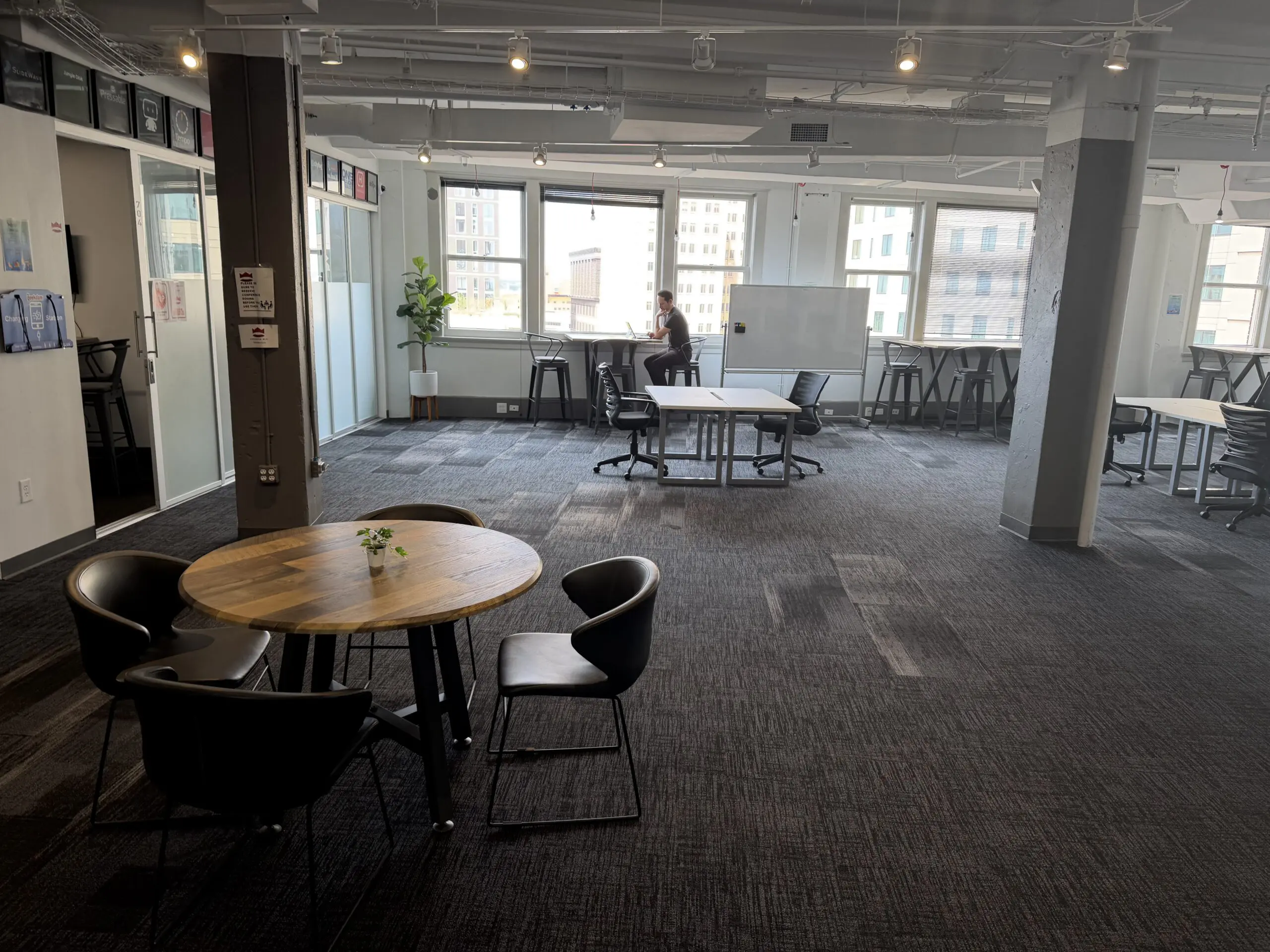
I kept an office there because I wanted to be part of building something. The desk was never the point. I wanted to be in the room where the San Antonio startup ecosystem was supposed to happen.
Geekdom is winding down private offices and dedicated desks, so mine is wrapping up. I could go find another one. I’m not going to.
Packing it up made me actually look at the numbers. San Antonio is the seventh largest city in the country. It’s not a startup hub. It’s also not failing. Both of those are true. We just keep grading ourselves on Austin’s scorecard.
The venture numbers are bad. They’re also the wrong numbers.
Start with venture capital, since that’s what everyone reaches for. The Q4 2025 PitchBook-NVCA Venture Monitor is the closest thing the industry has to an official record. It doesn’t mention San Antonio once. Not in the metro tables. Nowhere.
Austin is ninety minutes up I-35. It pulled in $7.19 billion across 272 deals in 2025. When Texas startups raised about $2.9 billion in the first quarter of that year, two thirds went to five companies. All five were Austin or Dallas.
San Antonio also doesn’t show up in Startup Genome’s 2026 list of the top 100 emerging startup ecosystems. Not at the bottom. Absent.
Here’s what complicates the easy story. New business applications in the metro hit an all-time high in 2025 at 38,934, up 8.5% over 2024 and up 69% over 2019, per the Census Bureau. Austin did 68,812. Dallas-Fort Worth did 168,817.
People here start businesses constantly. They just don’t turn into venture-backed companies. Kauffman puts San Antonio’s share of employment at firms under two years old at 2.99% in 2024. It was 3.31% the year before and 4.00% in 2019.
We’re forming more companies and they’re employing less of the workforce every year. More founders at the top won’t fix that. We’re describing the wrong economy.
Lorenzo Gomez said the quiet part out loud
Lorenzo Gomez ran Geekdom and the 80/20 Foundation, co-founded Tech Bloc, and spent a decade at Rackspace. Nobody in this city has more standing on the subject.
He told the San Antonio Report in January that “anyone that was a hiring manager at Rackspace realized the futility of trying to recruit young single people to San Antonio.” Then he added the part that stuck with me. “There should be a whole bunch of jobs that we should be able to go to for our next careers and that just never was there.”
Gomez has also called San Antonio a “family city” and named it as one of the things that define the city’s ecosystem brand. He doesn’t say it as an insult. He says it as a fact.
That’s the fact we keep trying to argue with. San Antonio is a place people stay for their families and leave for their careers. A startup ecosystem runs on the opposite. It runs on people with no dependents who can eat two years of equity instead of salary.
We’ve spent fifteen years trying to fix the brand. The brand was accurate.
The other scoreboard is enormous
Now run the numbers we leave out of the pitch.
Joint Base San Antonio generated $53.5 billion in economic output and supported 223,349 jobs in 2025, per the Texas Comptroller. The Comptroller calls that a conservative estimate.
| What San Antonio actually runs on | Annual output | Jobs supported |
|---|---|---|
| Joint Base San Antonio | $53.5B | 223,349 |
| South Texas Medical Center | $18.0B | 96,980 |
| Port San Antonio | $9.0B | 35,600 |
The South Texas Medical Center study came out last September on 2024 data. Port San Antonio’s number is FY2024.
In July, Toyota announced a $3.6 billion expansion adding 2,000 jobs. It brings Tacoma production back from Mexico and roughly doubles the plant by 2030. That’s $8.3 billion Toyota has put into this site since 2003. JCB’s plant opens next month at about $500 million and a million square feet, the largest facility the company runs anywhere in the world.
And last October, Texas stood up its new Cyber Command here with a $135 million appropriation, headquartered at UTSA and sitting next to the 16th Air Force and NSA Texas. Texas built a whole new agency around a capability we already had. We treated it like a ribbon cutting.
Not one of those numbers came from a seed round.
A startup hub needs three things. We have none of them.
Dense capital. Repeat operators who’ve done it before. Exits that push both back into the next cohort. San Antonio is thin on all three, and no program fixes any of them.
Census QuickFacts puts the bachelor’s degree rate for adults 25 and up at 29.0% in San Antonio and 59.6% in Austin. Median household income is $65,056 here against $80,734 nationally. Average hourly earnings run about $31.72, below Texas and below the US, per the Dallas Fed.
You can’t run a venture economy on that math. Not because the people aren’t capable. Because venture scaling assumes a labor pool that can absorb equity risk instead of needing a check on the 15th and the 30th.
The exit record says the same thing. Rackspace was founded in 1998 and went private in a $4.3 billion Apollo deal in 2016. Defense Unicorns crossed a billion in January on a $136 million Series B. Two exits worth talking about in roughly a decade. Nobody got rich enough off those to fund the next round of companies.
I’ll put my own cards down. Most of my consulting clients aren’t local. Now that I’m raising for AdLlama, nearly every conversation that matters happens somewhere else. I wanted the local bet to pay differently than it did.
The startups that work here look nothing like Austin’s
Three kinds of companies are actually growing in San Antonio. None of them are SaaS.
Defense gets the headlines. Darkhive started in a garage here in 2021 and has since taken more than $100 million in Department of Defense small business contracts plus a $21 million round led by Ten Eleven Ventures. Headcount went from 15 to more than 50. Defense Unicorns moved its headquarters here from Colorado Springs.
Cybersecurity has more people. Port San Antonio has close to 2,000 cyber professionals on one campus. Insane Cyber raised $4.2 million led by Paladin Capital Group in 2024. CNF Technologies was the only San Antonio company picked as an awardee on an Air Force research contract with a $950 million ceiling.
Then there’s CPG, and this is the one people outside Texas don’t understand.
H-E-B is headquartered here and runs about $49.6 billion in revenue across 455 stores. Getting on that shelf is a distribution event most venture-backed companies never reach. H-E-B runs a competition called Quest for Texas Best that has reviewed more than 7,000 samples and paid out close to $3 million in prizes over twelve years. Fifty-five suppliers from it have crossed a million dollars in sales.
Hess Street Foods is what that path looks like. Maria Flores moved to San Antonio in 2021 and started selling her grandmother’s chorizo seasoning recipe in 2023. She went through Break Fast & Launch at Launch SA, then won first prize and $20,000 in the 2024 Quest for Texas Best. She used the money to fund her first H-E-B purchase order. She’s now in about 160 H-E-B stores plus every Central Market.
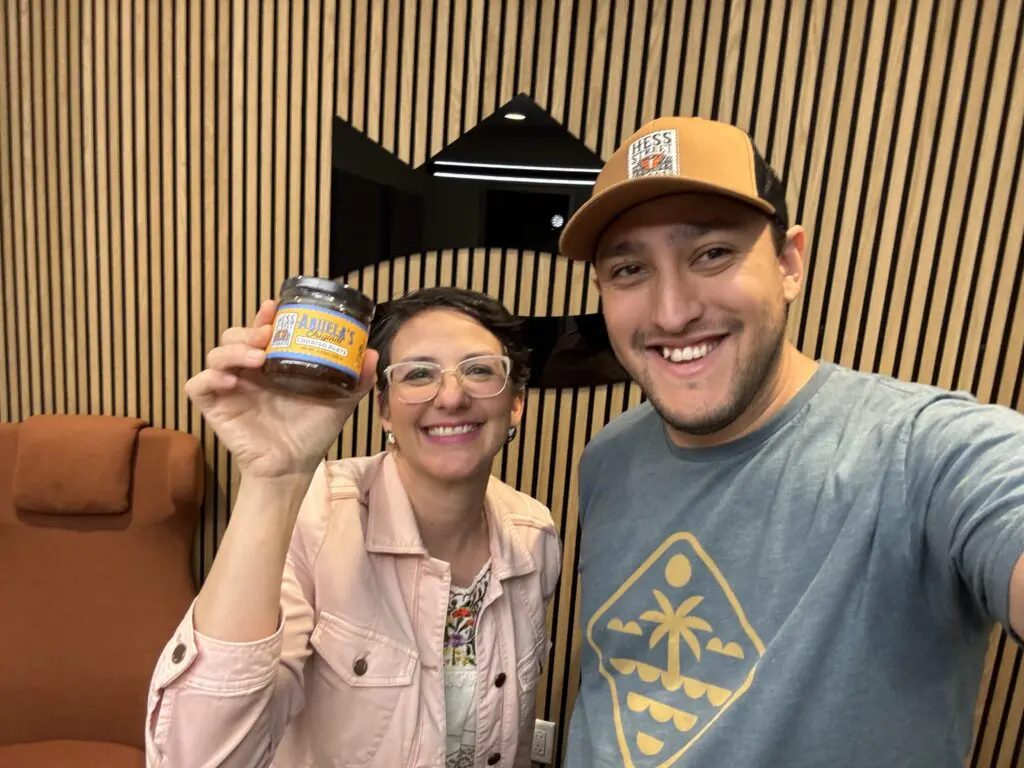
No venture round. No demo day. One buyer said yes and a two-year-old company had statewide distribution.
That’s a real startup path. Nobody puts it on a panel.
Here’s what bothers me. The founders building these companies aren’t sitting downtown. They’re online, in group chats and Discords and on X, because that’s where an ecosystem lives now. Geekdom’s own blog hasn’t published since 2024. We’re closing the room downtown and nobody built the one that replaces it. If Geekdom wants to stay the front door, it has to show up where the founders already are.
I love this city. It keeps making itself harder to live in.
I’m not writing this from somewhere else. My family is here. That’s exactly why I’m going to say the next part.
San Antonio’s metro poverty rate is the third highest among the 25 largest metros in the country, behind Detroit and Houston. Inside the city it’s 17.1%. Child poverty under five is 27%, against 18.1% nationally. Median household income here rose about $10,000 between 2013 and 2022, the smallest gain of any major Texas city.
Now look at what we spend on.
Bexar County voters approved a hotel tax increase for a new Spurs arena in November 2025, 52.14% to 47.86%. The arena runs $1.3 billion with $800 million of it public. The county’s $311 million share went to a vote. The city’s $489 million came through a tax reinvestment zone and never did.
The last arena was supposed to transform the East Side. It opened in 2002. Residents there will tell you what happened. Trinity University economist David Macpherson calls stadium subsidies “reverse Robin Hood,” and says the promised benefits never show up. Half of San Antonio renters already spend more than 30% of their income on housing.
Then there’s the airport. Southwest carries 40.3% of SAT’s domestic traffic, double the next-largest airline. The city gave it three gates in the new Terminal C. American got six. Delta got four. Southwest sued the city in federal court, then asked the FAA to pull San Antonio’s federal grant funding. That fight only settled in May.
San Antonio has about 60 nonstop destinations. Austin has 87 with a smaller metro. Our only route to Europe died in 2025 and nothing replaced it.
We’re building a billion-dollar arena in a city where executives connect through Dallas to get here.
The wrong identity costs real money
In 2025, Greater:SATX brought in $119 million in capital investment and 321 jobs. The goals were $850 million and 6,000 jobs. The three years before that averaged roughly $1.1 billion and 3,000 jobs a year.
One off year happens. This one landed at 14% of the investment target and 5% of the jobs target.
Information sector employment in the metro fell 7.1% year over year as of June, and total nonfarm jobs grew 0.6%, per the Bureau of Labor Statistics. The tech part of the economy is shrinking fastest.
We’ve paid for the optics before too. DeLorean promised 450 jobs at Port San Antonio for around a million dollars in city and county incentives. It peaked near 18 employees and shuttered by April 2024. The county killed the deal.
I’ve killed projects I was attached to. It took the county a lot longer to do the same with DeLorean.
San Antonio is an expansion city. It should say so.
Companies get born where capital is dense and risk is cheap. They get built where land is available, labor stays, costs are sane, and the anchors don’t move.
San Antonio is unusually good at the second job and structurally bad at the first. Toyota. JCB. Navistar. Microsoft’s data centers. The whole defense and cyber cluster. Every one of those is a second-stage decision by a company that already existed.
Nobody is making that pitch. Come here when you’re ready to scale. Not when you’re ready to be born.
That changes who we recruit, what we subsidize, and what we tell a 25-year-old about staying. Right now we tell them to found something and then apologize when there’s no Series A waiting. We could be telling them about 223,000 jobs attached to the largest joint base in the Department of Defense. And a state cyber command that just moved in down the street.
What I’d change
- Stop reporting startup counts. Report expansion wins, retention, and jobs above a wage threshold. Whatever number goes in the annual report is the number everybody chases.
- Build incentives around second and third sites. First-site relocations are the most competitive and least loyal deals in economic development. Expansions of companies already here are cheaper to win than first-site deals, and they stay.
- Make the cyber cluster the front door. The 16th Air Force, NSA Texas, and Texas Cyber Command sit in one metro. Nobody outside Texas knows that.
- Treat H-E-B like the accelerator it already is. One shelf placement does more for a local company than most seed rounds. Fund inventory and co-packing capacity instead of another pitch competition.
- Buy air service before you buy another building. Sixty nonstops against Austin’s 87. Fund routes.
- Fix the talent math before the founder math. At 29.0% bachelor’s attainment, everything downstream is capped. No accelerator fixes that.
- Fund the boring middle. The gap isn’t pre-seed checks. It’s growth capital for profitable companies doing $2M to $20M that will never raise venture and shouldn’t.
- Quit benchmarking against Austin. Different capital base, different labor pool, a decade’s head start. Austin is not the benchmark.
The honest close
I’m not writing this because I gave up on San Antonio. I’ve been here most of my life and I’m not going anywhere. I’m writing it because I spent years betting on a version of this city the data doesn’t support. I’d rather say that out loud than keep sponsoring an identity we haven’t earned.
Gomez wrote last year that the jobs we create here aren’t just economic, they’re moral. He’s right. A city with 27% child poverty needs jobs that pay. We already know how to land those. We keep chasing the other kind.
San Antonio doesn’t need to become a startup hub. It needs to quit apologizing for not being one and start selling what it’s already best in Texas at. Most of the companies that will define this city over the next twenty years already exist. They just haven’t moved here yet.


![[No Code] How to Build a Course with WordPress](https://leonhitchens.com/wp-content/smush-webp/2020/09/photo-1524178232363-1fb2b075b655-768x512.jpg.webp)